

Table of Contents
Difference Between SIL and SDA NDIS Funding: SADC Disability Services
Introduction
Difference Between SIL and SDA NDIS Funding: Navigating the world of NDIS funding can be confusing, especially when it comes to understanding terms like Supported Independent Living (SIL) and Specialist Disability Accommodation (SDA). Many participants, families, and carers struggle to understand how these two types of funding work together and what they cover.
At SADC Disability Services, our goal is to simplify this process for you. As a trusted NDIS-registered provider in Sydney, we take pride in helping participants make informed choices that align with their goals for independence, comfort, and quality of life.
In this comprehensive guide, we’ll explain the difference between SIL and SDA, how they work under the NDIS, and how SADC Disability Services supports participants through both. Whether you’re seeking daily living support or purpose-built accommodation, SADC is here to make your NDIS journey easier, transparent, and empowering.
What is SIL (Supported Independent Living)?
Supported Independent Living (SIL) refers to the assistance provided to help people with disabilities live as independently as possible in their own homes or shared living environments.
SIL covers daily living supports, including help with personal care, meal preparation, household chores, medication management, and developing life skills.
At SADC Disability Services, SIL is more than just assistance — it’s a pathway to empowerment. Our SIL programs are personalised, focusing on building confidence, independence, and meaningful community connections.
SADC’s Approach to SIL
SADC provides flexible SIL services that cater to individual needs. Whether participants live alone, with friends, or in shared accommodation, we ensure the right level of support at the right time.
Our SIL services include:
- Assistance with daily living tasks such as cleaning, cooking, and laundry.
- Personal care support, including grooming, bathing, and dressing.
- Help with developing social and communication skills.
- Support in managing household responsibilities.
- 24/7 on-call support to ensure participant safety and comfort.
SADC’s trained support workers create a nurturing, inclusive environment where participants can live confidently and independently.
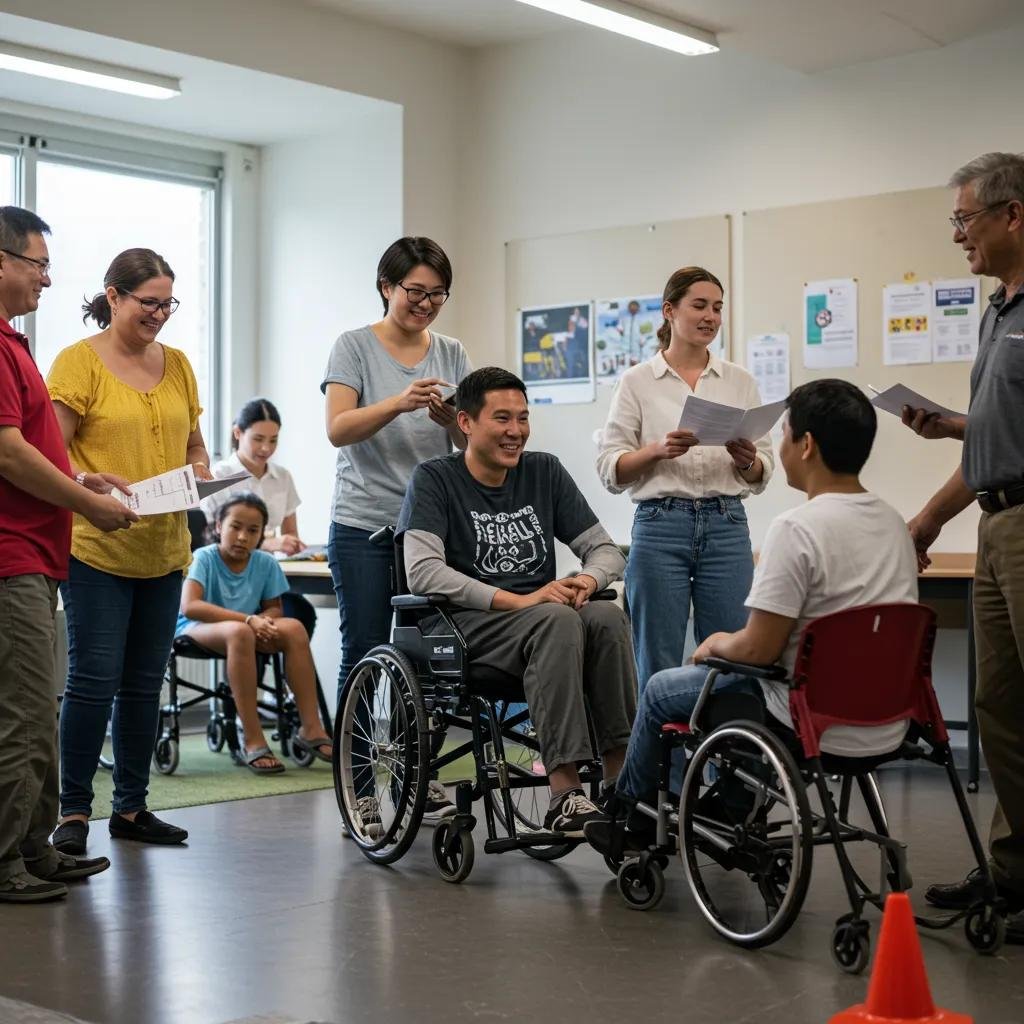
What is SDA (Specialist Disability Accommodation)?
Specialist Disability Accommodation (SDA) refers to specially designed housing for people with extreme functional impairments or very high support needs. It’s not about the day-to-day support, but about where participants live — the physical environment itself.
SDA homes are purpose-built with features like:
- Wider doorways for wheelchair access.
- Smart home technology for safety and independence.
- Reinforced walls or hoists for physical support needs.
- Modified bathrooms and kitchens for easy accessibility.
At SADC Disability Services, we collaborate with SDA housing providers to ensure participants have access to the right type of accommodation that meets their needs and complements their SIL supports.
Key Difference Between SIL and SDA
Understanding the difference between SIL (Supported Independent Living) and SDA (Specialist Disability Accommodation) is essential to making the most of your NDIS plan.
| Aspect | SIL (Supported Independent Living) | SDA (Specialist Disability Accommodation) |
|---|---|---|
| Purpose | Provides support services to help with daily living. | Provides physical housing for people with high needs. |
| Funding Covers | Staff assistance, personal care, meal preparation, and daily support. | Building design, modifications, and accessibility features. |
| Who It’s For | Participants needing daily assistance to live independently. | Participants with extreme functional impairments or very high support needs. |
| Managed By | SADC Disability Services (support workers and coordinators). | SDA providers or housing partners, with SADC assisting coordination. |
| Can You Have Both? | Yes – participants can have SIL and SDA funding together. | Yes – SDA covers the home, SIL covers the care inside it. |
At SADC Disability Services, we help participants access and coordinate both funding types so they can live safely, independently, and comfortably in the right environment.
How SIL and SDA Work Together
While SIL and SDA are separate types of NDIS funding, they often work hand in hand. SDA provides the home, and SIL provides the support within that home.
For example:
- A participant with physical disabilities might live in an SDA home with modifications like ramps and smart controls.
- SADC then provides SIL support — assistance with daily activities, meal preparation, and community access.
This combination ensures participants not only have a safe place to live but also the care they need to thrive.
SADC Disability Services: Your Partner in SIL and SDA Support
At SADC Disability Services, we take a participant-first approach to disability care. Our mission is to empower individuals to live life on their terms — with the right combination of housing, care, and independence.
Our SIL Expertise
SADC’s Supported Independent Living programs are customised to suit every participant’s abilities and goals. Our dedicated support workers provide:
- 24/7 personal assistance.
- Daily skill development.
- Community inclusion opportunities.
- Flexible support levels — from minimal help to high-intensity support.
We believe SIL should not just meet a participant’s needs but help them grow and gain confidence every day.
Our SDA Coordination Support
Although SADC is primarily a support provider, we collaborate closely with SDA housing specialists to ensure participants find a home that suits their accessibility requirements.
Our coordination team helps participants:
- Understand SDA eligibility.
- Choose appropriate SDA housing designs.
- Transition smoothly from other living arrangements.
- Combine SDA housing with SIL support seamlessly.
SADC’s team ensures that participants don’t face barriers in accessing the best living arrangements under their NDIS funding.
Who Qualifies for SIL or SDA Funding?
Eligibility for SIL Funding
You may qualify for SIL if:
- You require regular assistance with personal and daily tasks.
- You want to live more independently.
- You need shared or individual living support.
- You have NDIS funding for Core Supports or Capacity Building.
SADC helps participants prepare and justify their SIL funding request through documentation and NDIS planning support.
Eligibility for SDA Funding
You may qualify for SDA if:
- You have very high support needs.
- You require specialised housing for accessibility or safety.
- You are eligible under NDIS Capital Supports.
- You have an approved SDA design type in your plan (e.g., High Physical Support, Robust, Fully Accessible).
SADC assists participants with the application process and coordinates with SDA providers to ensure your accommodation matches your lifestyle and goals.
SADC’s Step-by-Step Support Process
- Initial Consultation
SADC’s team begins by understanding your goals, needs, and preferences. - Assessment and Planning
We work with you and your NDIS planner to determine your eligibility for SIL or SDA. - Service Matching
Our coordinators connect you with the right support services and accommodation options. - Ongoing Support and Monitoring
Once you’re settled, we ensure your plan continues to meet your evolving needs. - Goal Review and Adjustment
SADC helps you review your NDIS goals regularly to ensure maximum funding effectiveness.
Why Choose SADC Disability Services for SIL and SDA?
Here’s why hundreds of Sydney participants trust SADC:
- NDIS-Registered Provider: Fully compliant with NDIS standards.
- Experienced Team: Compassionate staff trained in high-quality disability care.
- Tailored Support: Services adapted to each participant’s unique goals.
- Transparent Communication: Open, honest, and participant-focused coordination.
- Comprehensive Coverage: Serving Sydney suburbs, including Parramatta, Riverwood, and beyond.
At SADC, we don’t believe in one-size-fits-all care — we believe in your way of living.
Common Misconceptions About SIL and SDA
Many participants confuse SIL and SDA. Let’s clear up some myths:
- Myth: SIL and SDA are the same.
Fact: SIL covers support; SDA covers the home. - Myth: You can only have one.
Fact: You can have both if eligible — SDA for housing, SIL for support. - Myth: SDA is only for wheelchair users.
Fact: SDA suits anyone with extreme functional impairment or high support needs. - Myth: SIL is only for shared homes.
Fact: SIL can apply to private homes, too, depending on your funding and needs.
SADC’s team provides the clarity you need to make the right decision for your lifestyle.
SADC’s Commitment to Empowerment and Independence
Our philosophy at SADC Disability Services is simple:
Every individual deserves to live with dignity, choice, and independence.
Through SIL and SDA coordination, we empower participants to:
- Live comfortably in suitable housing.
- Build life skills for long-term independence.
- Access professional and compassionate care every day.
Our mission is not just to provide services but to create a life-changing experience for every participant we support.

Conclusion
The difference between SIL and SDA NDIS funding lies in the type of support each provides — one focuses on daily living assistance (SIL), while the other ensures access to suitable housing (SDA).
At SADC Disability Services, we combine both aspects seamlessly to help participants live fulfilling, independent lives.
If you’re unsure about your eligibility or need guidance through your NDIS plan, SADC is here to help. Our caring professionals in Sydney are always ready to listen, advise, and support your journey toward greater independence.
Focus Keywords
- SIL vs SDA NDIS
- NDIS SIL Sydney
- NDIS SDA funding
- Supported Independent Living Sydney
- Specialist Disability Accommodation Sydney
- NDIS providers Sydney
- SADC Disability Services
- NDIS funding support Parramatta
- Disability housing Sydney
- NDIS registered provider NSW
Get in touch
91 Belmore Rd, Riverwood NSW 2210
1300 242 492
SADC disability services
FAQs about SIL, SDA, and SADC Disability Services
1. What does SIL mean under the NDIS?
Supported Independent Living (SIL) refers to the daily support provided to NDIS participants so they can live more independently, either alone or in shared accommodation. SADC Disability Services offers personalised SIL programs in Sydney to help participants develop life skills and confidence.
2. What is SDA in the NDIS?
Specialist Disability Accommodation (SDA) provides specially designed housing for people with very high support needs or significant functional impairment. SADC Disability Services helps participants access and coordinate SDA housing with appropriate supports.
3. What is the main difference between SIL and SDA?
SIL funds support services like personal care and daily living assistance, while SDA funds the physical home itself, designed for accessibility and high needs. SADC helps participants access both for complete independence.
4. Can I receive both SIL and SDA funding together?
Yes. Many NDIS participants are funded for both SDA and SIL, where SDA covers the home and SIL provides the care and support within that home. SADC coordinates both seamlessly.
5. Who is eligible for SIL funding?
You may be eligible for SIL if you need regular help with daily activities such as cooking, cleaning, or personal care. SADC Disability Services assists participants in preparing evidence and applying for SIL funding.
6. Who qualifies for SDA funding?
SDA is for people with extreme functional impairment or very high support needs. SADC helps participants understand eligibility and find suitable SDA homes in Sydney.
7. Does SADC Disability Services provide SIL accommodation?
Yes. SADC offers SIL-supported accommodation across Sydney, helping participants live comfortably and independently with trained staff available 24/7.
8. Does SADC manage SDA properties?
SADC collaborates with SDA housing providers to connect participants to appropriate homes but primarily focuses on support services within SDA or SIL settings.
9. What kind of support does SADC offer under SIL?
SADC provides help with cooking, cleaning, personal care, medication management, transport, and social skill development under SIL support.
10. Can I choose where I live with SADC SIL support?
Absolutely. SADC ensures participants have choice and control over their living arrangements and the type of home that best fits their preferences and needs.
11. What is the process to access SIL funding?
SADC helps participants through every step — from eligibility assessment and documentation to NDIS plan preparation and SIL service delivery.
12. How can SADC help me apply for SDA funding?
SADC’s support coordinators assist in gathering documentation, understanding SDA design categories, and liaising with SDA providers to secure suitable housing.
13. What are the SDA design categories?
There are four SDA design categories: Improved Liveability, Fully Accessible, Robust, and High Physical Support. SADC helps you find housing that fits your category and lifestyle needs.
14. Can I stay in my own home and still receive SIL support?
Yes, you can. SADC provides SIL supports in your private home, shared house, or supported accommodation, depending on your NDIS plan.
15. Does SADC offer 24-hour support?
Yes. SADC Disability Services offers round-the-clock SIL support to ensure safety, comfort, and continuous assistance whenever needed.
16. Can I change SIL providers if I’m not satisfied?
Yes, you can change providers anytime. SADC makes the transition smooth and ensures minimal disruption to your daily life and supports.
17. How does SIL help with independence?
SIL builds independence by helping participants develop skills for cooking, cleaning, budgeting, communication, and community engagement — all part of SADC’s empowerment-based approach.
18. What are the benefits of SDA housing?
SDA homes are purpose-built for accessibility and safety, featuring ramps, wide doors, assistive technology, and other features for comfortable independent living.
19. Does SADC charge for SDA housing?
SDA rent contributions are regulated by NDIS guidelines. SADC helps participants understand payment structures and coordinate with approved housing providers.
20. Is SIL funding part of Core Supports or Capital Supports?
SIL is funded under Core Supports, while SDA is funded under Capital Supports in the NDIS plan.
21. Can couples or friends share SIL housing?
Yes. SADC supports shared living arrangements where friends or couples can live together and receive tailored SIL supports.
22. How does SADC ensure quality SIL services?
SADC employs trained, compassionate staff and follows strict NDIS quality and safety guidelines to ensure the best care and participant satisfaction.
23. Does SADC provide SDA in Parramatta and surrounding areas?
Yes. SADC Disability Services assists participants across Parramatta, Riverwood, Liverpool, Bankstown, and greater Sydney to access suitable SDA options.
24. Can SDA housing include smart home technology?
Yes. Many SDA homes coordinated by SADC partners include smart home features such as automated lighting, temperature control, and emergency call systems.
25. How do I know if I qualify for SDA?
You can contact SADC Disability Services for a detailed eligibility assessment and guidance through your NDIS planning process.
26. What’s included in SADC’s SIL support plan?
Personalised care routines, goal-setting, skill-building activities, transport assistance, and social inclusion opportunities.
27. Does SADC help with community participation?
Yes. Under SIL and NDIS goals, SADC encourages community engagement, helping participants join local programs, social events, and recreational activities.
28. What is the role of SADC support coordinators?
They help participants understand their NDIS plan, access funding, coordinate services, and maintain a smooth relationship between SIL and SDA providers.
29. Can I get both SIL and SDA through SADC?
Yes, SADC provides SIL services and coordinates SDA housing options, ensuring both work together for complete participant support.
30. Does SADC provide emergency SIL support?
Yes, SADC offers emergency or short-term accommodation options with full SIL support when urgent needs arise.
31. What skills can I learn through SIL with SADC?
Cooking, personal hygiene, budgeting, social interaction, problem-solving, and community engagement are part of SADC’s skill development focus.
32. Is SDA only for wheelchair users?
No. SDA is for participants with any type of extreme functional impairment, not just mobility challenges. SADC assists all eligible participants equally.
33. Can I move to another SDA property if my needs change?
Yes. SADC helps participants transition smoothly to a new SDA property that better fits their changing needs or preferences.
34. Are SADC’s SIL services available to all age groups?
Yes. SADC supports both young adults and older participants seeking greater independence through personalised living supports.
35. How does SADC match support workers to participants?
SADC carefully matches participants with support workers based on skills, personality, and cultural preferences to ensure comfort and trust.
36. Does SADC offer transport support under SIL?
Yes. SADC provides transport assistance for appointments, shopping, social outings, and community programs.
37. Can SADC help me prepare for my NDIS review?
Absolutely. SADC support coordinators help participants gather evidence, review progress, and prepare for NDIS plan reassessments.
38. What makes SADC different from other providers?
SADC focuses on personalised care, participant choice, and genuine compassion — providing tailored supports rather than generic services.
39. How can I contact SADC for SIL or SDA assistance?
You can reach SADC at 91 Belmore Rd, Riverwood NSW 2210 or call 1300 242 492 for personalised consultation and support.
40. Why should I choose SADC Disability Services?
Because SADC is not just a provider — it’s a partner in your journey toward independence. With expertise in SIL, SDA, and NDIS coordination, SADC ensures every participant lives a life filled with dignity, comfort, and confidence.
Get in touch
91 Belmore Rd, Riverwood NSW 2210
1300 242 492
SADC disability services